
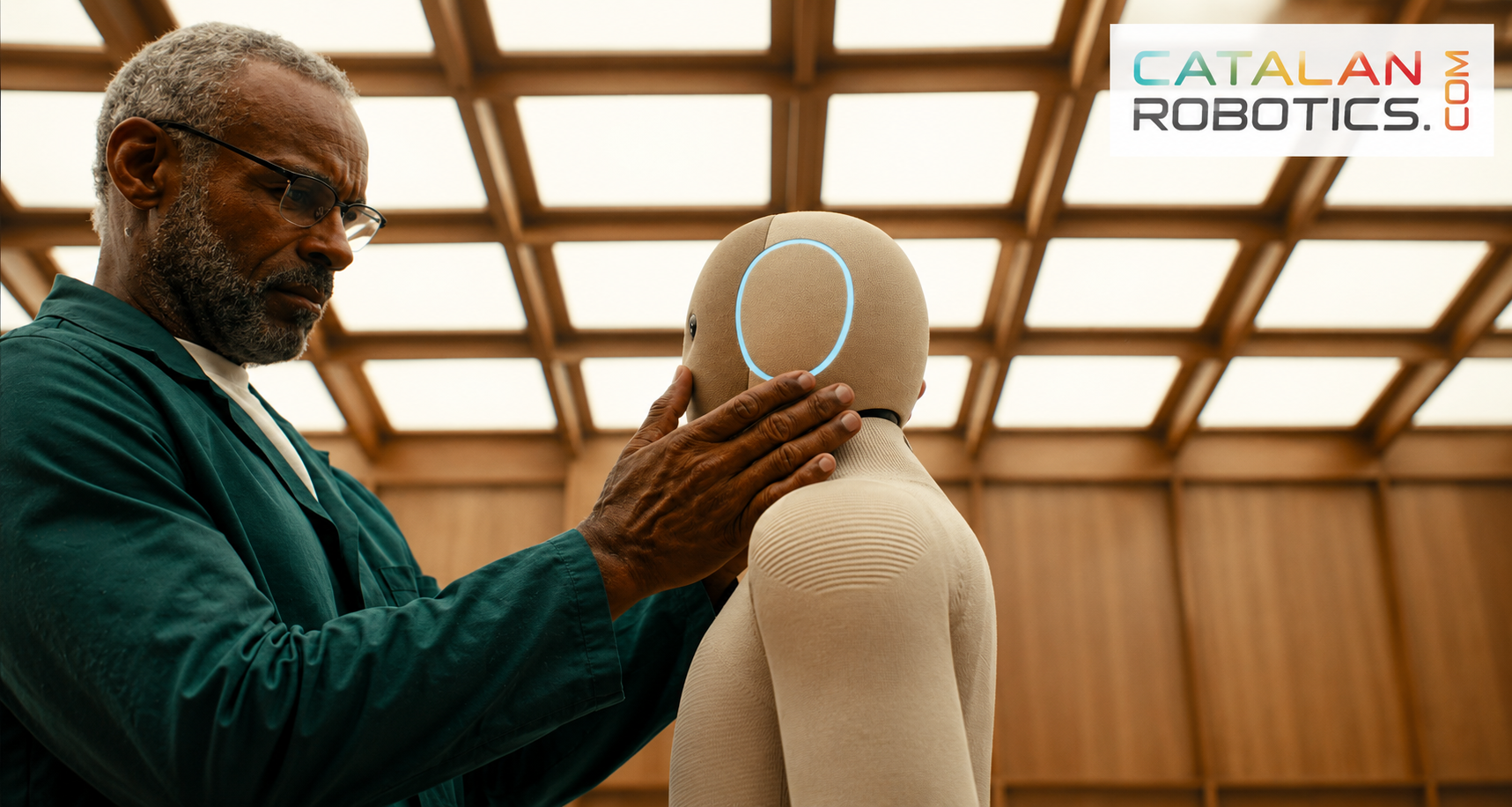
The humanoid robotics industry is approaching a moment comparable to the emergence of the first mass-produced personal computers. 1X Technologies has announced the launch of a manufacturing facility designed to produce up to 10,000 NEO humanoid robots annually. Moreover, the company plans to increase its production capacity by more than tenfold by the end of 2027.
For many years, humanoids remained largely demonstration projects. Companies showcased impressive videos, but actual production volumes remained minimal. That situation is now beginning to change. Manufacturers are no longer talking about dozens of prototypes, but about thousands and tens of thousands of units.
Particular attention is drawn to the fact that NEO is not being developed for an industrial production line, but for operation within human environments. The developers are exploring use cases that include household assistance, elderly care, transporting objects and carrying out simple domestic tasks. In effect, this represents the creation of an entirely new category of consumer technology.
The economic logic closely resembles that of the automotive market in the early twentieth century. As long as a device is produced in the hundreds, it remains an expensive technological novelty. Once production reaches tens of thousands of units, economies of scale begin to take effect, reducing manufacturing costs and accelerating the adoption of the technology.
The practical conclusion is that the primary barrier facing humanoid robots today is no longer technology but economics. As soon as production volumes are measured in tens of thousands of devices, the market gains an opportunity to move from experimentation to large-scale deployment. Many analysts regard this moment as the true beginning of the robotic era.
https://www.1x.tech/discover/neo-factory
Source